

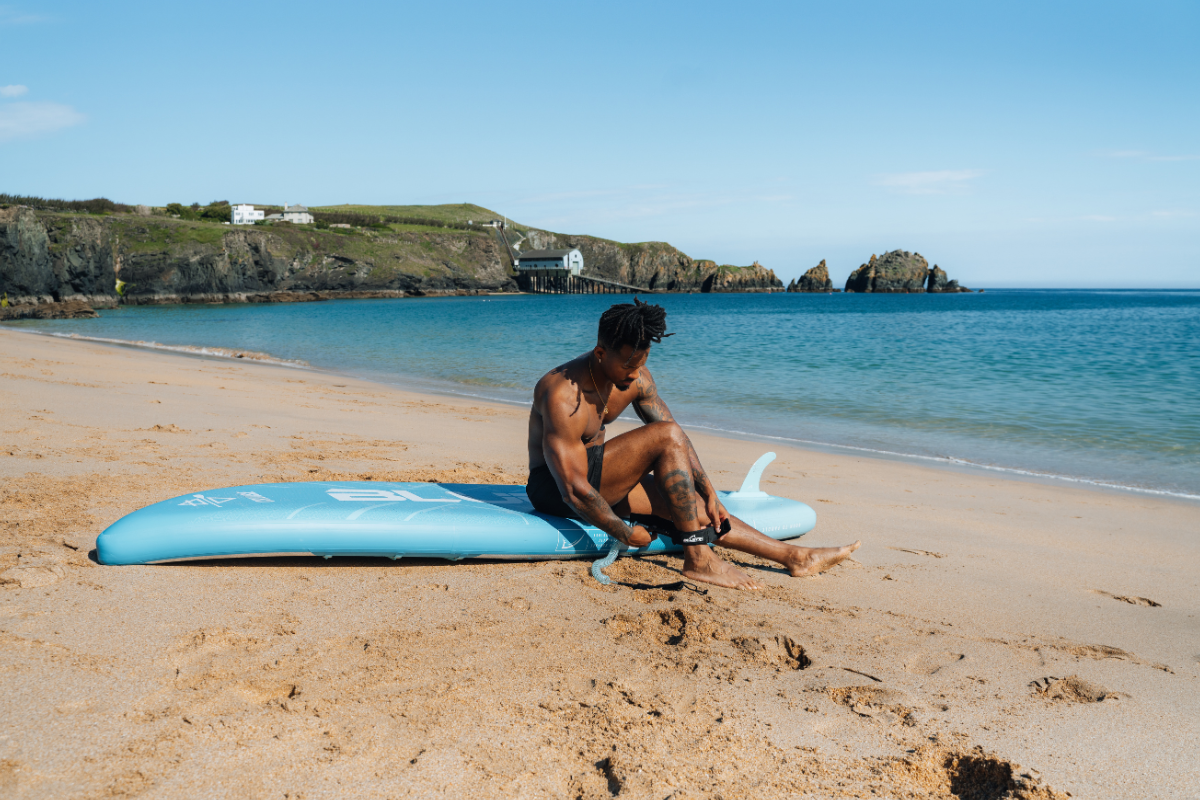

There are days when the best thing you can do for your head is get away from four walls, put your phone in a waterproof case and spend an hour moving across open water.
That does not make paddleboarding a cure for anxiety, depression or chronic stress. What it can offer is a combination that modern daily life often lacks: movement, natural daylight, open space, changing scenery and focused time away from screens.
That combination helps explain the growing interest in paddleboarding for mental health and wider wellbeing. Research into physical activity and so-called “blue spaces” environments dominated by water such as rivers, lakes and coastlines suggests that spending active time outdoors can support mood and wellbeing. The World Health Organization also recognises regular physical activity as beneficial for mental health and capable of reducing symptoms of depression and anxiety.
Why Paddleboarding for Mental Health Can Be So Restorative
A gym workout can provide valuable exercise. A walk can get you outside. Sitting beside a lake can provide quiet. Paddleboarding combines all three.
You are moving your body while simultaneously responding to wind, water, balance, direction and your surroundings. Your attention has somewhere immediate to go. Instead of repeatedly cycling through emails, deadlines or tomorrow's problems, you have to notice what is happening underneath your feet. That shift of attention is one reason a gentle paddle can feel mentally different from simply “doing exercise”.
Research around green and blue spaces is still developing, and scientists are careful not to claim that proximity to water automatically causes better mental health. However, reviews and observational research have repeatedly found associations between visits to natural blue environments and measures such as wellbeing, psychological restoration and lower mental distress. Recent Natural England research also found that participants commonly described rivers, lakes and coastal locations as calming and restorative places used for relaxation, reflection and coping with stress.
For anyone who already enjoys being near water, a paddleboard gives you a practical reason to spend more time there.
The Mental Health Benefits of Being Near Water
Scientists often use the term “blue space” for accessible natural or built environments where water is a prominent feature.
For paddlers, that might mean:
A quiet lake
A slow-moving river
A sheltered coastal bay
A reservoir with permitted paddling access
A canal or inland waterway
A calm section of coastline early in the morning
The important point is not that water possesses some mysterious therapeutic property. The environment can change how you spend your attention. On land, particularly in busy towns and cities, the brain may constantly process traffic, signs, conversations, notifications and other demands. On a calm lake, your field of attention becomes simpler: paddle stroke, horizon, breeze, water movement and balance. That can create space between you and whatever has been occupying your thoughts.
Water Gives Your Attention Somewhere Gentle to Go
Think about what you notice while paddling slowly. The nose of the board moving through the surface. The sound of your paddle entering the water. Reflections changing as clouds move overhead. Small adjustments underneath your feet. None requires the same kind of concentrated mental effort as spreadsheets, messages or navigating a crowded station. You are occupied without necessarily feeling overloaded. That distinction matters when what you need is not complete inactivity, but a lower-pressure form of attention.
Open Water Can Change Your Sense of Scale
Stress has a habit of narrowing attention. A problem that felt manageable at breakfast can occupy your entire mental landscape by lunchtime.
Getting outdoors can physically widen that landscape. Standing on a board with an open horizon ahead of you can provide a useful change in perspective. It does not remove the problem, but it may help interrupt the feeling that the problem is the only thing currently happening. For some people, that psychological distance is one of the most useful parts of paddling.
Why Sunlight and Daylight Matter
The “sun” part of water and sun deserves some clarification. You do not need blazing Mediterranean sunshine for an outdoor paddle to be worthwhile. Natural daylight matters even when the British sky is grey.
Light is one of the major environmental signals involved in regulating the circadian system the internal timing system associated with sleep and wakefulness. Research indicates that daytime light exposure, particularly brighter natural light, plays an important role in circadian timing and sleep. That makes an early or daytime paddle interesting from a wellbeing perspective.
Instead of spending the first part of your Saturday under artificial light or looking at a screen, you are exposing yourself to natural outdoor light while moving. The NHS also advises people experiencing seasonal affective disorder to get as much natural daylight as possible, exercise regularly and spend time outside during the day.
Think Daylight, Not Sunbathing
There is an important difference between getting outside in daylight and deliberately trying to maximise UV exposure. Sunburn increases skin cancer risk, and you can burn in the UK even when conditions do not feel especially hot. NHS guidance recommends protecting your skin and balancing outdoor activity with sensible sun safety.
For paddleboarders that is particularly relevant because there is often little shade on open water.
Use:
Suitable sunscreen on exposed skin
A hat where appropriate
Sunglasses with good UV protection
Lightweight sun-protective clothing in stronger conditions
Water for hydration
Shade and breaks during prolonged summer sessions
Being outside is useful. Getting burnt is not part of the benefit.
Paddleboarding Gives You Meaningful Physical Activity
There is another relatively straightforward reason SUP can support wellbeing: you are exercising. Paddleboarding involves repeated upper-body movement, core stability, balance and continuous small muscular adjustments through the feet and legs.
Your effort level can also be scaled easily. A beginner might paddle slowly around a sheltered lake for 30 minutes. An experienced paddler might cover several kilometres at a steady touring pace. Neither session needs to become a maximal workout to count as movement.
The World Health Organization states that regular physical activity can improve overall wellbeing and reduce symptoms associated with depression and anxiety. Adults are generally encouraged to accumulate regular moderate or vigorous activity across the week rather than relying on occasional intense sessions. Consistency matters more than turning every paddle into training. That is good news if your objective is mental wellbeing rather than speed.

Paddleboarding Can Become Active Mindfulness
Tell someone who is stressed to “stop thinking about it” and you quickly discover how ineffective that instruction is. Give the brain something tangible to do and things become easier. Paddleboarding naturally demands small amounts of attention:
Place the paddle.
Apply pressure.
Finish the stroke.
Recover.
Look ahead.
Adjust balance.
Repeat.
That repetitive pattern can create something close to active mindfulness. You are not necessarily sitting still trying to empty your mind. You are directing your attention towards a simple physical process.
Try the Ten-Stroke Reset
On a calm section of water, try this during your next session.
For ten paddle strokes, concentrate only on:
Where the blade enters the water
The pressure against the paddle
How quietly you can complete the stroke
The feeling underneath your feet
Your breathing
Then look around and identify three things you had not noticed before. It could be the shape of the shoreline, birds moving across the water or the sound of wind behind you.
Nothing complicated is required. The objective is simply to bring your attention back to where you actually are.
Progress Creates Small, Useful Wins
Mental wellbeing is not only about relaxation. Sometimes what helps is achievement. Paddleboarding creates obvious milestones without requiring competition:
Standing for your first full session
Paddling your first kilometre
Learning to turn efficiently
Falling in and climbing back onto the board confidently
Exploring a new lake
Completing your first longer route
Becoming comfortable in slightly more varied conditions
These are small pieces of evidence that you can learn, adapt and improve. A beginner who initially spends an entire session staring nervously at their feet may eventually be looking across the horizon and paddling without consciously thinking about balance. That progression can be satisfying in its own right. It also gives you something enjoyable to plan for.
Solo Paddle or Paddle With Other People?
Solo Paddling
A carefully planned solo session can provide quiet time and independence.
There is no need to maintain conversation. You can paddle at your own pace, stop when you want and simply spend time observing your surroundings. For someone whose week is dominated by meetings, customers, family responsibilities or constant communication, solitude can feel restorative rather than lonely.
Solo paddling does, however, demand greater attention to safety. Choose sensible conditions, tell someone your route, carry communication equipment appropriately and avoid taking unnecessary risks.
Social Paddling
For other people, the social element is more valuable. Paddling side by side is also different from sitting opposite someone at a table. Conversation can happen naturally without constant eye contact, and periods of silence do not feel unusual.
A relaxed SUP session can therefore become an easy way to maintain friendships while doing something active. Bluefin's ambassador community reflects this broader side of paddleboarding: people sharing time outdoors, exploring local waterways and encouraging others to get onto the water.
A Simple Paddleboarding Wellbeing Routine
You do not need a sunrise expedition, a perfect lake or a two-hour workout.
A useful wellbeing paddle should be easy enough that you actually repeat it.
Stage |
What to Do |
Why It Helps |
Before launching |
Check weather, water conditions and equipment |
Removes avoidable uncertainty |
First 5 minutes |
Paddle slowly and settle your balance |
Gives body and mind time to adjust |
Next 10 minutes |
Find an easy, repeatable rhythm |
Encourages relaxed movement |
Next 10 minutes |
Look around rather than at the board |
Shifts attention towards your environment |
Middle of session |
Stop somewhere safe for a short break |
Creates genuine time to observe the water |
Return journey |
Paddle at a comfortable steady pace |
Keeps the session restorative rather than exhausting |
After paddling |
Avoid immediately opening work messages |
Lets the mental transition last a little longer |
A 30-Minute Version
When time is limited:
5 minutes: gentle warm-up paddling.
10 minutes: continuous relaxed movement.
5 minutes: slower paddling while deliberately observing your surroundings.
5 minutes: pause or drift safely.
5 minutes: paddle back to shore.
A short session you repeat most weeks is likely to become a more useful habit than waiting months for the “perfect” paddling day.
The Best Paddleboard Is Often the One That Removes Friction
If wellbeing is the goal, equipment should make getting onto the water simpler rather than becoming another source of stress. Think carefully about the practical barriers between deciding to paddle and actually launching.
Do you live in a flat? Do you walk some distance from the car? Are you a complete beginner? Do you want relaxed lake sessions or longer touring routes? Choose around your real routine, not the paddler you imagine becoming six months from now.
Bluefin Lite: For Easy Transport and Simple Sessions
The Bluefin Lite is designed around a lighter, more compact package and a stable shape aimed at beginner and casual paddlers.
That can matter more than people expect. If carrying your SUP from home to the water already feels like a workout, you may use it less often. A board that is straightforward to transport can make spontaneous summer evenings or short lake sessions considerably easier.
Bluefin Cruise: For Versatile Recreational Paddling
The Bluefin Cruise is designed as a stable all-rounder with a touring-influenced profile, making it suited to beginners while leaving room for longer recreational paddles as confidence develops.For many paddlers, this is the useful middle ground: stable enough to relax on, versatile enough to explore with.
That makes sense if your wellbeing routine might evolve from short sessions near shore into longer routes with friends.
Bluefin Carbon: For Paddlers Who Want to Go Further
If your idea of unwinding eventually becomes longer-distance exploration, the Bluefin Carbon is designed around increased stiffness, control and performance. Its dual-chamber construction is also intended to add buoyancy and an additional layer of security. The important point is not that a more advanced board creates more wellbeing. It does not.
The right SUP is simply the one that suits the kind of paddling you genuinely enjoy.
Why Durability Matters for a Regular Paddle Habit
A wellbeing routine works best when you can rely on your equipment.
Constantly worrying about damage, failing valves or equipment that needs replacing does not exactly create a relaxing pre-paddle ritual. Our Built to Last approach focuses on durable construction, long-term use and a five-year warranty on eligible non-outlet SUPs.
There is also an environmental argument for buying equipment intended to remain in use rather than treating outdoor kit as disposable. Our Eco Positive approach includes initiatives focused on longevity, reduced packaging, recycled materials where possible, conservation and giving returned boards a second life. That matters because enjoying natural environments and looking after them should be part of the same habit.

Beginner Mistakes That Can Turn a Relaxing Paddle Into a Stressful One
1. Choosing Conditions Beyond Your Ability
Wind matters enormously on a paddleboard.
A beautiful-looking lake can become hard work when a moderate breeze starts pushing you away from your launch point.
Beginners should prioritise calm, sheltered water and conservative routes.
2. Paddling Away With the Wind Behind You
It feels fantastic until you turn around.
If conditions allow, experienced paddlers often prefer dealing with the harder direction earlier so the return is not unexpectedly demanding.
Always assess conditions locally rather than following a fixed rule.
3. Turning Every Session Into a Distance Challenge
Tracking kilometres can be motivating.
It can also turn something restorative into another performance metric.
You do not need a personal best every weekend.
Some days, twenty quiet minutes near shore is exactly the session you need.
4. Spending the Whole Paddle Filming It
Photos are part of the fun, but there is a point at which documenting an experience starts replacing the experience.
Put the phone away for a section of every trip.
Give yourself ten minutes in which nobody else needs to know where you are or what the sunset looks like.
5. Ignoring Water Safety Because the Session Is “Relaxing”
A calm mindset does not mean casual preparation.
Check your equipment, understand the water you are entering, use the appropriate personal flotation equipment for your environment and activity, carry suitable communication equipment, understand leash choice for the waterway, and check weather and local conditions before launching.
Wellbeing starts with making sensible decisions.
What About Paddleboarding in Autumn and Winter?
The UK and much of northern Europe do not provide endless warm summer mornings. That does not mean your outdoor routine needs to disappear in September.
Cool-season paddling can be wonderfully quiet, but the consequences of immersion become more serious as water temperatures fall. Dress for the water rather than simply the air temperature, take cold-water risk seriously and develop winter skills gradually.
If conditions are unsuitable for paddling, keep the underlying habit. Walk beside the water. Visit a local lake. Head to the coast. Get outside during daylight. The aim is not to maintain a perfect SUP streak.
The aim is to protect the routine of moving outdoors and spending time around places that help you decompress.
Paddleboarding Should Support Mental Health, Not Replace Mental Healthcare
It is worth being clear about what paddleboarding can and cannot do. Outdoor exercise can support wellbeing. Natural environments can feel restorative. Daylight can help support normal circadian rhythms. A paddle can create breathing space in a difficult week.
But paddleboarding is not a replacement for professional care if you are experiencing persistent depression, significant anxiety, trauma or another mental health condition.
Someone can benefit from counselling, medication or other professional treatment and still find paddleboarding valuable. These things are not mutually exclusive.
Think of SUP as one possible component of a healthier routine: movement, nature, daylight, social connection, sleep, recovery and appropriate professional support when needed.
How to Make Paddleboarding Part of Your Routine
The hardest part is often not paddling. It is getting out of the door. Reduce the number of decisions required.
Try This Approach
Keep your core paddling equipment together.
Identify two or three familiar local launch locations.
Learn which weather conditions suit those spots.
Put paddling dates in your calendar before the week becomes busy.
Invite a friend when motivation is low.
Allow short sessions to count.
Stop measuring every paddle by distance or speed.
Summary: Why Water + Sun Matters
The appeal of paddleboarding for mental health is not based on one single mechanism. It is the combination.
Paddleboarding can give you:
Physical movement, which is associated with better mental wellbeing.
Time in blue space, environments that research increasingly associates with restoration and wellbeing.
Natural daylight, an important signal for circadian rhythm and sleep-wake regulation.
Focused attention, because balance and paddle technique keep you connected to the present task.
A break from screens, notifications and indoor environments.
Small achievements, from learning a turn to completing a new route.
Social connection or intentional solitude, depending on what you need that day.
Regular contact with nature, providing a reason to keep getting outdoors.
The most useful paddle may not be your longest, fastest or most photogenic. It might simply be the evening when work has been relentless, you nearly stay at home, then spend forty minutes moving quietly across a familiar lake.
You come back to shore with exactly the same responsibilities waiting for you. They just feel a little less close And sometimes, that space is enough to change the rest of the day.
Share:
Where to Paddleboard in the UK This Week: 5 Places Worth the Trip
Coastal vs Inland Paddleboarding: Where Should You SUP?