

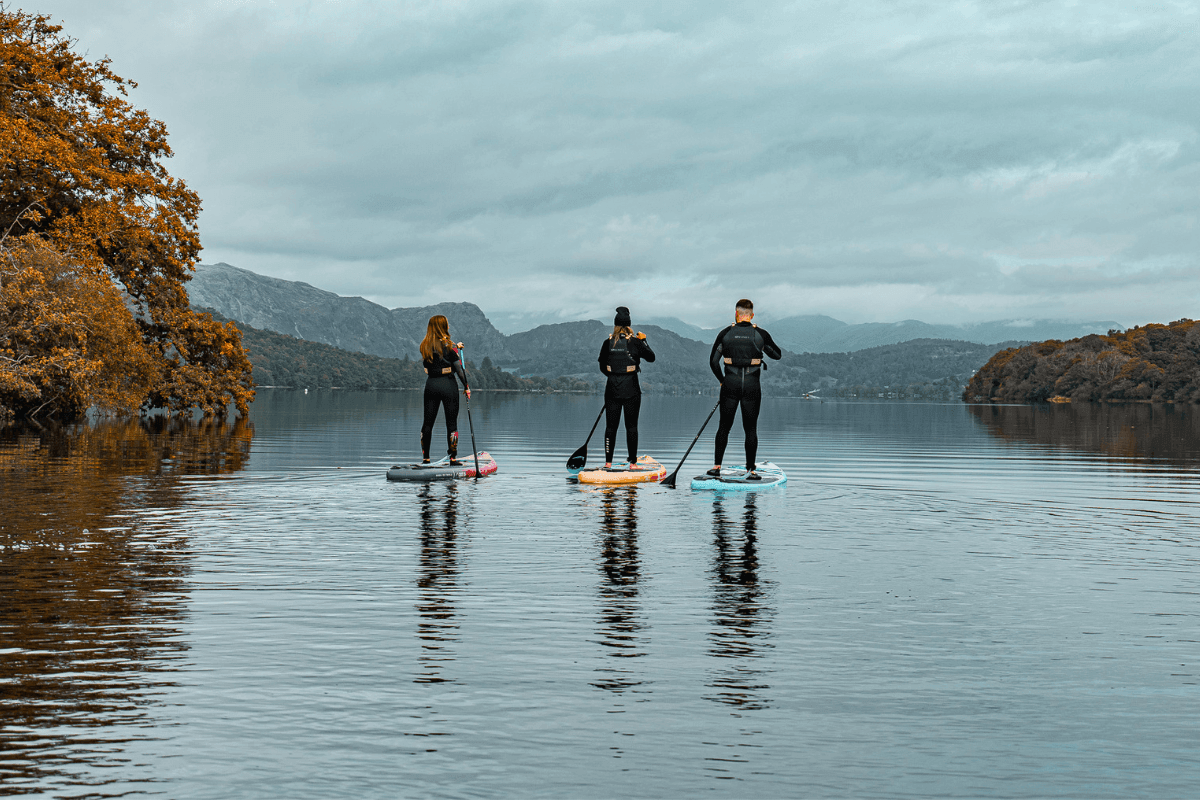

Paddleboarding offers a brilliant way to explore Britain's coastline, lakes and waterways while improving balance, building strength and spending more time outdoors. However, paddleboarding safety in the UK depends on understanding how quickly conditions can change, even during what appears to be a calm day. A sheltered beach can become exposed when the wind changes direction. Warm sunshine can disguise dangerously cold water, while shorter autumn evenings can leave paddleboarders returning to shore in fading light.
Whether you're paddling along the Cornish coast, exploring the Lake District or enjoying a quiet session on a local reservoir, knowing how to respond to changing conditions is essential. This guide explains how wind, temperature and daylight affect stand-up paddleboarding (SUP), alongside practical steps for planning safer sessions throughout the year.
Why Changing Conditions Matter for UK Paddleboarding Safety
British weather is famously unpredictable, but the real challenge for paddleboarders is understanding how changing conditions affect the water. A paddleboarding session that begins in calm weather can become considerably more demanding when wind, waves or visibility deteriorate.
Three environmental factors deserve particular attention:
Wind: Changes in wind speed and direction can affect balance, steering and your ability to return to shore.
Temperature: Cold water and changing air temperatures increase the risks associated with falling in, fatigue and prolonged exposure.
Light: Reduced daylight makes obstacles, navigation markers and other water users harder to see.
These factors can also interact. For example, a strengthening wind can increase heat loss when you're wet, while fading daylight makes it harder to identify a safe landing point. The safest paddleboarders continually assess conditions rather than relying entirely on the forecast they checked before leaving home.
Understanding Wind Conditions Before Paddleboarding
Wind is one of the most important considerations when deciding whether conditions are suitable for paddleboarding. Unlike a kayak, a stand-up paddleboard places much of your body above the water. This creates additional wind resistance, particularly when you're standing.
How Much Wind Is Too Much for Paddleboarding?
There is no universal safe wind speed. Your experience, location, board, wind direction and surrounding conditions all affect the level of risk. However, the following ranges provide a useful starting point for recreational paddleboarding.
Wind speed |
Approximate conditions |
Paddleboarding guidance |
0–5 mph (0–8 km/h) |
Calm or very light breeze |
Often favourable on sheltered, flat water |
6–10 mph (10–16 km/h) |
Light breeze |
May suit beginners in suitable sheltered locations |
11–15 mph (18–24 km/h) |
Noticeable breeze |
More demanding; beginners should generally avoid |
16–20 mph (26–32 km/h) |
Freshening wind |
Unsuitable for most casual recreational paddlers |
Above 20 mph (32 km/h) |
Stronger winds |
Avoid recreational SUP sessions |
These figures are illustrative, not guaranteed safety thresholds. Even a relatively light offshore wind can create dangerous conditions, and gusts may be significantly stronger than the forecast average.
Offshore Winds: One of the Biggest UK Paddleboarding Risks
An offshore wind blows from land towards open water. These winds are particularly deceptive because the sea immediately beside the beach can appear flat and inviting. Once you move away from shore, however, the wind may become stronger and begin pushing your paddleboard further out. Returning against the wind can quickly become exhausting.
The RNLI paddleboarding safety guidance specifically advises paddleboarders to avoid offshore winds.
RNLI
Before launching:
Check wind direction, not simply wind speed.
Identify whether the wind is blowing towards or away from shore.
Look for signs of increasing gusts.
Consider whether the conditions will change during your session.
Avoid launching if offshore winds could carry you into open water.
What About Onshore and Cross-Shore Winds?
Onshore winds blow towards land. Although they don't create the same offshore drift, stronger onshore winds can generate breaking waves and challenging launch conditions. Cross-shore winds blow along the coastline and can push paddleboarders sideways, making it difficult to return to the intended beach. Always consider where the wind could carry you if you became tired or lost control of your board.

Cold Water Paddleboarding in the UK
Water temperature is another major consideration, particularly outside the summer months. UK lakes, rivers and coastal waters can remain cold even during sunny spring days. Air temperature alone is therefore a poor indicator of whether conditions are suitable for paddleboarding.
Why Cold Water Shock Matters
Cold water shock is the body's immediate reaction to sudden immersion in cold water.
It can cause:
An involuntary gasp.
Rapid, uncontrolled breathing.
Increased heart rate.
Difficulty coordinating movement.
Panic and an increased risk of inhaling water.
Cold water shock can occur in water temperatures of 15°C or below, making it relevant across much of the UK for considerable parts of the year.
Met Office
Being a confident swimmer does not remove the danger of an unexpected cold-water immersion. Wearing a suitable buoyancy aid and appropriate thermal protection helps reduce risk, but neither makes cold water harmless.
What Should You Wear Paddleboarding in Different Seasons?
Season |
Typical considerations |
Recommended preparation |
Spring |
Cold water despite milder air |
Suitable wetsuit or drysuit, buoyancy aid and wind protection |
Summer |
Sunshine may disguise cold water |
Check water temperature, use sun protection and carry appropriate layers |
Autumn |
Falling temperatures and shorter days |
Increased thermal protection and conservative session planning |
Winter |
Cold air, cold water and limited daylight |
Appropriate cold-water equipment, specialist experience and sheltered locations |
The appropriate clothing depends on water temperature, weather, exposure and the likelihood of immersion. For cold conditions, a properly selected drysuit with suitable insulating layers may offer advantages over lightweight summer clothing.
Recognising Early Signs of Cold-Related Problems
Cold exposure can affect concentration, coordination and physical performance.
Warning signs include:
Persistent shivering.
Clumsy movements or difficulty handling equipment.
Increasing fatigue.
Reduced concentration or confusion.
Difficulty maintaining balance.
If you or another paddleboarder develops these symptoms, end the session and reach a safe landing point promptly. Seek urgent medical assistance for suspected hypothermia or significant cold-water exposure.
Paddleboarding Safely as Daylight Changes
Changing daylight is an often-overlooked part of paddleboarding safety. During the UK summer, long evenings create opportunities for relaxed after-work sessions. By autumn, however, sunset arrives considerably earlier. The transition can catch out paddleboarders who are used to spending longer on the water.
Why Fading Light Increases Risk
Reduced visibility makes it more difficult to:
Identify submerged obstacles.
Recognise changes in the shoreline.
Spot boats and other paddleboarders.
Judge distance accurately.
Locate a suitable landing point.
Respond to unexpected changes in weather.
Cloud cover, mist and rain can reduce visibility well before sunset.
Planning Around Sunset
Before leaving shore, check the local sunset time and establish a conservative return deadline. Allow additional time for headwinds, fatigue or unexpected delays. For example, if sunset is at 6:15 pm, planning to land at 6:10 pm leaves very little room for problems.
A safer approach is to finish substantially earlier, while there is still enough daylight to navigate and land confidently. Beginners should avoid deliberately planning sessions that extend into darkness. Specialist low-light paddling requires appropriate training, navigation knowledge, lighting and compliance with local waterway rules. A simple light attached to a board does not automatically make night paddleboarding safe.
Essential Paddleboarding Safety Equipment for UK Conditions
What Should You Take Paddleboarding?
The following equipment is particularly valuable when conditions may change.
Buoyancy aid: Correctly fitted and suitable for paddling.
Appropriate leash: Selected according to the type of water and entrapment risks.
Waterproof phone pouch: Keep your phone accessible on your person.
Thermal protection: Clothing suited to the water temperature and conditions.
Dry bag: For additional clothing and essentials.
Suitable footwear: Protects your feet where required without restricting movement.
Drinking water: Helps manage hydration during longer sessions.
Emergency whistle: Provides an additional way to attract attention.
Choosing the Correct Paddleboard Leash
Leash selection is especially important on UK rivers and tidal waterways. An ankle or calf leash may be appropriate on relatively still, unobstructed water, but it can create a serious entrapment hazard in flowing water. The RNLI recommends a quick-release waist leash for tidal or flowing environments where entrapment is a risk. Paddlers should receive instruction on choosing and operating the correct system for their location.
RNLI
For moving rivers, particularly around weirs and obstructions, seek specialist guidance before launching. Some environments may be unsuitable for recreational SUP altogether.
Choosing Reliable Paddleboarding Equipment
When selecting a paddleboard, prioritise construction quality, stability, appropriate load capacity and suitability for the water you'll use. Inflatable boards should also be maintained and inflated according to the manufacturer's instructions. A stable board can improve confidence, but it cannot compensate for unsafe weather or poor decision-making.
Investing in a lesson with a qualified instructor is often more valuable than upgrading equipment before you've mastered basic paddling, turning, recovery and self-rescue techniques.

Practical UK Paddleboarding Scenarios
Scenario 1: A Calm Morning on the Cornish Coast
You arrive at a sheltered beach and find calm water with very little surface movement. However, the forecast shows an offshore wind developing later in the morning. Although the water currently looks suitable, heading out could leave you exposed to increasing offshore drift.
Safer decision: Avoid the offshore-wind session and choose another suitable sheltered location or day.
Scenario 2: An Autumn Paddle in the Lake District
The afternoon feels mild, but the lake water is significantly colder than the surrounding air. You plan to paddle in lightweight sportswear because you don't expect to fall in. The problem is that an unexpected immersion could lead to rapid heat loss, particularly if the wind strengthens.
Safer decision: Dress for the water temperature, wear a buoyancy aid and choose a route close to accessible shore.
Scenario 3: An Evening Session on a Local Reservoir
You start paddling after work, expecting a short session.Cloud cover develops, visibility deteriorates and the return journey takes longer than anticipated.
Safer decision: Set an early return time, remain close to shore and leave the water before visibility becomes a concern.
How to Check Conditions Before a UK Paddleboarding Session
The Met Office beach and tide forecast guidance explains how wind direction, wave conditions and tides affect safety around the coast.
Met Office
Before paddleboarding, check:
Wind: Average strength, gusts and changes in direction.
Water temperature: Not just the predicted air temperature.
Tides and currents: Particularly for coastal routes and estuaries.
Visibility: Potential fog, rain and cloud cover.
Daylight: Sunset time and a realistic return deadline.
Local restrictions: Launch permissions, navigation rules and hazards.
Avoid relying on a single weather app or assuming that a forecast for a nearby town accurately represents exposed water conditions.
When Should You Cancel a Paddleboarding Session?
Recognising when not to paddle is an important safety skill.
Consider cancelling or postponing when:
Offshore winds could carry you away from shore.
Gusts or waves exceed your ability.
Thunderstorms are forecast or developing nearby.
Visibility is poor or likely to deteriorate.
Water temperatures exceed the protection provided by your equipment.
You cannot identify a suitable launch and return route.
Fatigue, illness or poor equipment condition may affect safety.
There is no benefit in continuing with a session simply because you've already travelled to the location.
UK Paddleboarding Safety Checklist
Before every session, ask yourself:
Have I checked the latest weather and wind forecast?
Do I understand the wind direction?
Have I checked tides and currents where relevant?
Am I dressed for the water temperature?
Am I wearing a suitable buoyancy aid?
Is my leash appropriate for this environment?
Can I contact emergency services if necessary?
Does someone know where I'm going and when I'll return?
Can I complete the route comfortably before visibility deteriorates?
Do I have a realistic alternative landing point?
For coastal emergencies in the UK, call 999 or 112 and ask for the Coastguard. For inland emergencies, call 999 or 112 and request the appropriate emergency service.
RNLI
Frequently Asked Questions About UK Paddleboarding Safety
Is paddleboarding safe in windy weather?
Can you paddleboard in the UK during winter?
Is it safe to paddleboard at sunset?
What is the most important safety equipment for paddleboarding?
Summary: Paddleboarding Safety in the UK
Safe paddleboarding depends on preparation, awareness and knowing when to change your plans.
The most important principles are:
Monitor wind strength and direction, particularly offshore winds.
Dress for water temperature rather than sunshine.
Allow a generous daylight margin.
Wear suitable safety equipment.
Choose routes appropriate to your ability.
Reassess conditions throughout the session.
Return to shore before conditions become difficult.
Conclusion: Make Paddleboarding Safety Part of Every UK Session
The UK's varied coastline, lakes and waterways provide excellent paddleboarding opportunities throughout the year. However, conditions can change quickly, and even familiar locations deserve careful assessment. Understanding wind, temperature and daylight helps you make informed decisions before launching and while on the water.
Ultimately, paddleboarding safety in the UK is about recognising your limits, respecting changing conditions and putting preparation ahead of distance or performance. The best session isn't necessarily the longest. It's the one you can enjoy confidently and finish safely.
Share:
Best UK Paddleboarding Destinations for October
What to Wear Paddleboarding in Cold Weather | UK Guide