

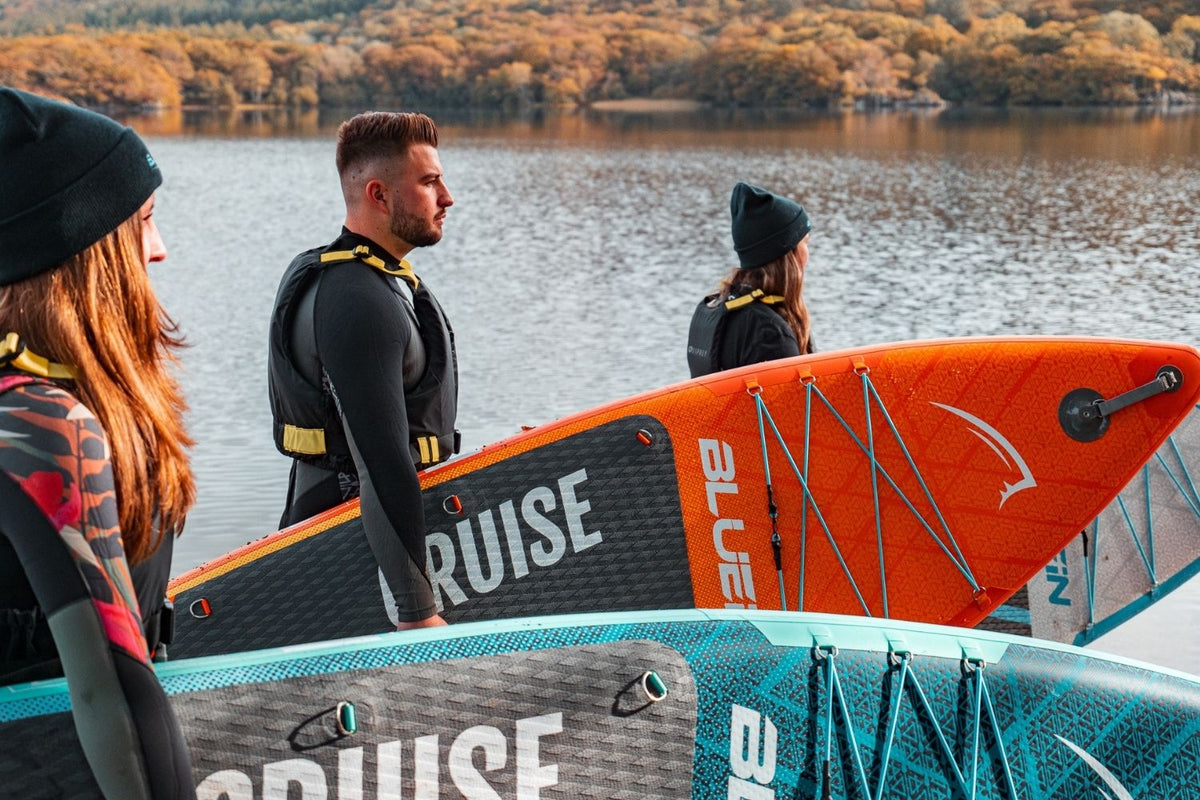
Early autumn might be one of the best-kept secrets in the British paddleboarding calendar. The busiest weeks of summer are fading, popular launch points are becoming quieter and changing foliage begins to transform familiar waterways. For anyone interested in early autumn paddleboarding UK adventures, September and the first part of October can offer a particularly rewarding mix of peaceful water, wildlife activity and dramatic scenery. It is not simply summer paddling with an extra layer of clothing, however. Shorter days, cooler water and faster-changing weather mean preparation matters more. Get those details right and autumn can become one of the most memorable parts of your SUP year.

Why Early Autumn Paddleboarding in the UK Is Worth It
During peak summer, beautiful lakes and coastal locations can become busy with swimmers, boats, kayaks and other paddleboarders. Once the school holidays finish, the atmosphere can change surprisingly quickly. Early autumn often brings more space to slow down and appreciate your surroundings. That matters when the reason for getting on a SUP is not simply to cover distance.
A quieter paddle can mean:
Less congestion around popular launch points.
More opportunities to stop, listen and watch wildlife from a respectful distance.
Softer morning and evening light for photography.
Changing woodland colours reflected across sheltered water.
Cooler conditions for longer paddles without summer heat.
A completely different perspective on familiar summer locations.
Autumn also encourages a slightly different style of paddleboarding. Instead of racing towards a destination, you may find yourself following the shoreline, exploring sheltered bays and spending longer observing what is happening around you. That slower pace is perfectly suited to wildlife and scenic paddleboarding.
Wildlife You Could Encounter on an Autumn SUP
A paddleboard offers an unusually quiet way to explore. Without an engine, you can move gently through a landscape and notice wildlife that might easily be missed from a road or busy footpath.
That does not mean approaching animals closely. Good wildlife encounters happen on the animal's terms, with plenty of distance between you and whatever you are watching.
Migrating and Resident Birds
Early autumn is an important period for bird movement across Britain. Estuaries, wetlands, reservoirs and sheltered lakes can become particularly interesting places to paddle.
Depending on the region and habitat, look out for:
Herons standing motionless along reed-lined edges.
Kingfishers flashing low over quieter waterways.
Geese and ducks gathering on larger bodies of water.
Waders feeding around estuaries, mudflats and sheltered coastlines.
Cormorants drying their wings on rocks, posts and islands.
Birds of prey passing over woodland and open valleys.
Binoculars are often more useful than paddling closer. A compact waterproof pair allows you to watch wildlife without altering your route or disturbing feeding and resting birds.
Deer and Woodland Wildlife
On lakes bordered by forest, woodland or open hills, early mornings can sometimes produce glimpses of deer and other mammals along the shoreline. Autumn also coincides with increased deer activity in some parts of the country. If you hear or see deer from the water, remain well away and avoid attempting to land nearby. A SUP gives you a wonderful viewing platform, but wildlife photography should never become wildlife pursuit.
Seals and Coastal Wildlife
Sheltered coastal routes can produce encounters with seals and seabirds. If seals are resting on rocks, sandbanks or beaches, keep your distance and never position the board between an animal and the water. Avoid deliberately paddling towards seals in the water too. Curiosity may occasionally bring wildlife towards you, but your job is to remain predictable and give the animal a clear route away. For coastal trips, checking local wildlife guidance before launching is just as important as checking the tide.
Best Places for Scenic Autumn Paddleboarding in the UK
Britain offers everything from mountain-framed lochs to reed-lined waterways and sheltered coastal bays. The best location is not necessarily the most famous one; it is the place that matches your ability and the day's conditions.
Region |
Autumn appeal |
Possible scenery and wildlife |
Best suited to |
Lake District |
Woodland colour and mountain reflections |
Fell views, wooded shorelines, waterbirds |
Scenic lake paddles |
Scotland |
Expansive lochs and rugged landscapes |
Islands, mountains, birds and shoreline wildlife |
Adventure paddling |
Wales |
Lakes, valleys and sheltered coastal routes |
Mountain scenery, woodland and seabirds |
Mixed inland/coastal trips |
Norfolk & East Anglia |
Wetlands and broad horizons |
Reed beds, waterbirds and autumn skies |
Wildlife-focused paddles |
South-west England |
Cliffs, coves and estuaries |
Coastal birds and marine wildlife |
Experienced coastal paddlers |

The Lake District
Autumn suits the Lake District exceptionally well. Woodland begins shifting through green, amber and copper while the surrounding fells provide a dramatic backdrop. Sheltered conditions can produce mirror-like reflections, although large lakes can still become rough quickly when the wind rises. Choose the specific lake and route according to the forecast rather than deciding purely from photographs or previous experience. For a wildlife-focused trip, consider a shorter shoreline route rather than crossing a large area of exposed water.
Scotland's Lochs
Scotland offers some of Britain's most memorable SUP landscapes. Bluefin ambassadors themselves regularly highlight Scottish locations when discussing favourite places to paddle, reflecting just how varied the country's water can be. Lochs can look incredibly calm from the shore while still presenting serious open-water conditions. Distance, wind direction and water temperature all deserve respect, particularly as the season changes. Plan conservative routes and always check local rules before launching.
Welsh Lakes and Valleys
North and mid-Wales combine mountain scenery with accessible inland paddling. Locations such as Llyn Padarn and other recognised paddling waters can be particularly striking once autumn colour develops. Conditions and access arrangements can change, so check current local information before every visit rather than assuming last year's arrangements still apply.
Wetlands and Broads
If wildlife is the priority, eastern England's wetlands offer a completely different experience from mountain lakes. Reed beds, wide skies and slow-paced exploration encourage observation rather than distance. These are places where paddling quietly matters, particularly around groups of feeding or resting birds. Navigation rules, licences and restrictions can apply on managed waterways, so establish what is required before launching.
How to Paddle Responsibly Around Wildlife
Seeing an animal from your board is exciting. Changing its behaviour because you wanted a closer photograph is not. Use a simple rule: if wildlife reacts to your presence, you are probably too close.
Good practice includes:
Slow down well before approaching wildlife.
Leave generous space around birds resting or feeding on the water.
Never surround wildlife with other paddlers.
Avoid landing in reed beds, mudflats or obvious resting areas.
Keep dogs under close control around sensitive habitats.
Carry your SUP over vegetation rather than dragging it through fragile areas.
Follow seasonal restrictions and marked conservation zones.
Take litter home, including food packaging and damaged equipment.
Part of enjoying the outdoors is helping ensure the next person encounters it in equally good condition.
Autumn SUP Safety: What Changes After Summer?
A sunny September afternoon can feel almost like midsummer. The water may tell a very different story. Air temperature is not a reliable indication of water temperature, so dress for the possibility of entering the water rather than for standing in the car park.
Watch the Wind
Wind should be one of the first things you check before every paddle. A sheltered launch point can make conditions look deceptively easy. Move beyond a headland, island or tree-covered bank and the wind may feel completely different.
Whenever possible:
Start your paddle into the wind so the return journey is easier.
Avoid long open-water crossings unless they match your experience.
Check how the forecast changes during the entire planned trip.
Have an alternative sheltered location available.
Turn around early if conditions begin deteriorating.
The safest decision is often made before you inflate the board.
Plan Around Shorter Days
By early autumn, daylight is disappearing noticeably earlier than during midsummer. Do not plan a summer-length evening route and simply assume you can paddle faster. Build a generous daylight margin into every trip. A waterproof phone, whistle and suitable light are sensible additions, but they are not substitutes for good timing.
Choose the Correct Leash
Your leash setup needs to match the environment. On appropriate open water, a conventional SUP leash may be suitable. Moving, flowing or tidal environments can present different entrapment risks and may call for a quick-release waist system and additional training. There is no single leash configuration for every type of water. Learn the correct setup for your route before paddling it.
What to Wear for Early Autumn Paddleboarding
Autumn SUP clothing is about adaptability. A still morning can become breezy by lunchtime, while a sunny afternoon can turn noticeably colder once clouds arrive.
Consider packing:
A suitable personal flotation device.
Clothing appropriate for the water temperature and conditions.
Lightweight wind protection.
Spare warm layers in a dry bag.
Hat or cap depending on conditions.
Water and high-energy snacks.
Waterproof phone protection.
Small first-aid kit.
Whistle.
Dry clothes for after the paddle.
For colder sessions, avoid relying entirely on clothing designed for dry land. Choose kit appropriate for watersports and the realistic possibility of immersion.

Choosing a Bluefin SUP for Autumn Exploring
Cruise: The Versatile All-Round Option
For mixed recreational paddling, the Bluefin Cruise range is designed as a stable, versatile all-round option. That makes sense when your autumn plans include a mixture of sheltered lakes, gentle touring and shorter scenic paddles. A stable platform is also useful when you want to slow down, look through binoculars or take photographs rather than constantly concentrating on balance.
Carbon: For Longer Explorations
If your autumn paddles regularly involve longer routes and you value a more performance-focused feel, explore the Bluefin Carbon range. For touring-style days, efficient tracking and a solid platform can make covering distance more enjoyable, particularly when you are carrying extra clothing and supplies.
Lite: For Easy Transport
Some of Britain's best scenic water requires a walk from the car or a journey by train. The Bluefin Lite range focuses on portability, making it useful for paddlers who prioritise easier carrying, storage and spontaneous trips. That can be a genuine advantage in autumn when quieter launch points sometimes involve walking further than the main summer access areas.
Common Early Autumn Paddleboarding Mistakes
Mistake 1: Dressing for the Air Temperature
A warm forecast does not make the water warm.
Always plan for immersion, even when you expect to stay dry.
Mistake 2: Launching Because the Water Looks Calm
A sheltered bay tells you very little about conditions two kilometres away.
Check the full forecast and understand how wind direction interacts with the shape of your route.
Mistake 3: Getting Too Close to Wildlife
The best wildlife experience is rarely the closest one.
Observe from distance, use binoculars and allow animals to behave naturally.
Mistake 4: Trying to Complete a Summer-Sized Route
Less daylight and cooler conditions increase the consequences of delays.
Choose a slightly shorter route and leave yourself time to stop, photograph the scenery and deal with unexpected conditions.
Mistake 5: Forgetting the Return Journey
Paddling with a tailwind feels wonderfully easy.
Turning around and discovering that you now have to battle into the same wind is far less enjoyable.
Plan both halves of the trip before launching.
A Simple Autumn SUP Planning Checklist
Before leaving home:
Check wind strength, direction and changes throughout the day.
Check rain, visibility and temperature.
Check tide times for coastal or tidal paddles.
Confirm access, launch rules and local restrictions.
Tell somebody where you are going.
Pack appropriate clothing and safety equipment.
Choose a route that leaves a generous daylight margin.
Identify at least one safe exit point.
At the water:
Reassess the conditions rather than relying entirely on the forecast.
Look for stronger wind further offshore.
Check that all equipment is properly secured.
Keep spare clothing dry.
Change the plan if reality does not match the forecast.
Turning a long paddle into a short one is good judgement, not a failed adventure.
Summary: Make Autumn Part of Your SUP Season
Early autumn transforms British paddleboarding. The combination of changing colour, quieter launch points, migrating birds, misty mornings and lower-angle sunlight can make familiar water feel completely new. Successful early autumn paddleboarding UK trips are built around three things: careful route choice, respect for wildlife and sensible preparation for cooler, less predictable conditions. You do not need to paddle farther to have a better autumn adventure. Sometimes the most memorable session is an hour spent following a wooded shoreline, watching birds move across the water and seeing the landscape reflected beneath your board.
Pack for the season, give wildlife room and choose a SUP suited to the kind of exploring you enjoy. Autumn is not the end of paddleboarding season; for many paddlers, it is when some of the best days begin.

Share:
Autumn Paddleboarding UK: Balance Work and SUP Time
Best UK Paddleboarding Destinations for October