

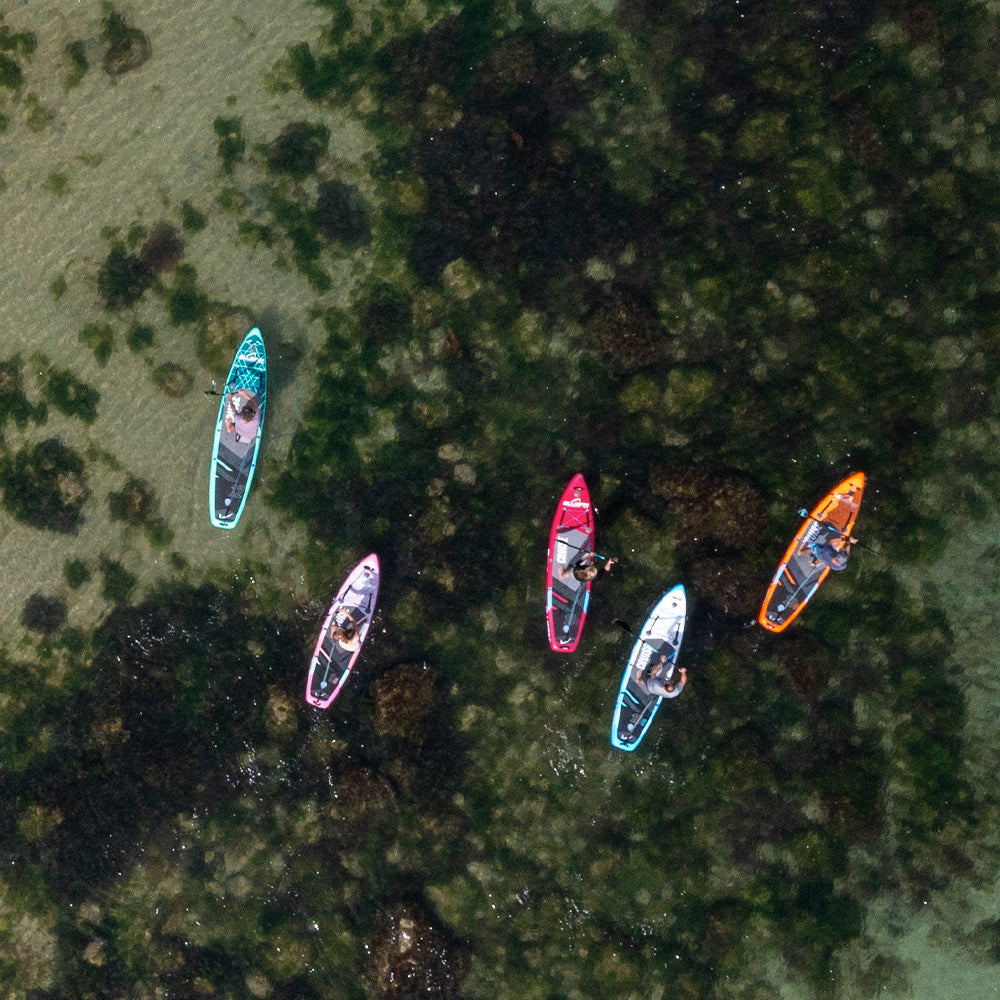
Your first stand-up session is usually quicker than you think
- Most beginners stand up within 10 to 30 minutes
- Flat water like lakes, canals, and reservoirs is the easiest place to learn
- A 10'8 all-round shape with 82cm width gives beginners more stability
- Day one usually starts on your knees before you rise to your feet
Best Paddleboard for Beginners: Stable Boards to Learn On
When you're learning to stand, calm water makes the biggest difference. We picked these boards because their all-round shapes, 32-inch width, and beginner-friendly specs help you build balance on l...


From Kneeling to Standing With Confidence
If you want practical paddleboard tips for beginners, start with the water, not your feet. We tell first-timers to pick flat water first: lakes, canals, and calm reservoirs give you a steady surface, so you can learn without fighting chop or boat wake.
Most new paddlers stand within 10 to 30 minutes. Some do it faster. Some need a full session of kneeling first. That is normal. You are learning a new balance pattern, and calm water makes that pattern much easier to read.
What is the best paddleboard for a beginners to buy?
The best choice for most first sessions is an all-round board with a wide shape. Our best paddleboard for beginners: Blue Original Cruise 10'8 Premium Inflatable SUP Paddleboard measures 325 x 82 x 16cm, which gives you a broad platform to kneel, rise, and settle your feet.
Keep in mind, a longer board can glide farther with each stroke, but it also feels bigger to carry and turn on shore. That is why we usually start beginners on a 10'8 all-round shape before moving them toward longer touring boards.
How to choose the right paddleboard, tips for beginners?
Use this simple stand up paddleboard guide on your first outing. Start on your knees in the middle of the deck. Take three to five easy strokes per side. Then place the paddle across the board, bring one foot up at a time, and stand slowly while looking at the horizon, not your toes.
- Kneel first: Find the board's center and let it settle.
- Hands low: Use the paddle like a light support, not a crutch.
- Feet parallel: Place them about hip-width apart.
- Soft knees: A small bend helps absorb wobble.
"If the board feels twitchy, slow down and drop back to your knees. That is progress, not failure."
For paddlers who want more glide after the basics, our best paddle boards for longer flat-water sessions: Mint Carbon 12' Premium Inflatable SUP Paddleboard adds a 12' length, a 10in US Touring Fin, and a 175kg max user weight. By now, you should understand three things: why flat water matters, how long standing usually takes, and the exact kneel-to-stand sequence to practice on your next session.
First-Time SUP Basics: Stand Up Sooner and Start Safer
If you want paddleboard tips for beginners that actually help on day one, start with your body position and your launch spot. Most new paddlers stand within 10 to 30 minutes on calm water. That timeline is normal. You do not need perfect balance. You need a steady board, soft knees, and flat water that does not shove you around.
What are the best paddleboard tips for beginners to buy?
Choose a board that gives you width and forgiveness first. For most first sessions, the best paddleboard for beginners is the Blue Original Cruise 10'8 because its 325 x 82 x 16cm shape gives you a broad platform, and its 150kg max user weight leaves room for gear or a dog. If you want more glide for longer flat-water paddles later, the best paddle boards option here is the Mint Carbon 12', which stretches to 366cm long and carries up to 175kg, but keep in mind its 11.15kg board weight is a bit more to handle on shore.
Posture that gets you upright faster
Start on your knees in the middle of the board. Put the paddle across the deck in front of you for support. Then bring one foot up at a time where your knees were. Look at the horizon, not your feet. That one change stops a lot of wobbles.
- Feet: Keep them about hip-width apart
- Knees: Bend them slightly, never lock them
- Back: Stay tall, not stiff
- Hands: Hold the paddle lightly and keep strokes short at first
How to choose the right paddleboard tips for beginners?
Pick your first location as carefully as your board. In this stand up paddleboard guide, we tell most beginners to start on lakes, canals, and reservoirs because the water is usually flatter and easier to read. Small chop and boat wake can feel minor from shore, but on your first session they steal confidence fast.
Use a leash every time. It keeps the board close after a fall, which matters because your board floats better than you do. And wear a PFD, which means personal flotation device. Look, even strong swimmers get tired in cold water.
"Your first goal is simple: kneel comfortably, stand once, and paddle back in control. If you can do that, you're on track."
So what should you understand now? First, standing up usually comes quickly on calm water. Second, posture beats brute force. Third, flat water gives you the easiest start. If you are also using this as a paddleboard buying guide, begin with a stable 10'8 all-round board before chasing speed or distance.
Best Paddleboard for Beginners: Stable 10'8 Boards for Flat Water Starts
Most people can stand up within 15 to 30 minutes when they start on calm water. In this stand up paddleboard guide, we picked four 10'8 all-round boards with an 82cm width, 16cm thickness, and a 15...
Frequently Asked Questions
How long does it usually take to stand up on a paddleboard?
For most first-timers, standing happens pretty quickly on calm water. If you start kneeling, keep your feet shoulder-width apart, and rise one foot at a time, you'll often get upright within your first session. Flat water matters here. Lakes, canals, and reservoirs give you a steadier surface, so you can focus on posture instead of fighting chop.
where should I start as a beginner?
Start on flat water. That's our clearest advice in this stand up paddleboard guide. A quiet lake, canal, or reservoir gives you time to practise getting on the board, finding your stance, and making short strokes without side waves pushing you around. Keep in mind that open, windy water feels much harder, even on a stable board.
What are the best paddleboard tips for beginners to buy?
If you want the easiest first ride, start with an all-round board around 10'8 with a wide deck. Our best paddleboard for beginners, the Blue Original Cruise 10'8, measures 325 x 82 x 16cm and supports up to 150kg, which gives new paddlers a stable platform to learn on. If you know you'll paddle farther and carry more weight, the Mint Carbon 12' stretches to 366 x 81 x 15cm and supports up to 175kg, but it weighs 11.15kg inflated, so it is a bit more to handle on shore.
Which board is the best paddle board for a complete beginner?
For most people, a 10'8 all-round board is the best place to start. Our Orange Sunset Cruise 10'8, Red Current Cruise 10'8, and Blue Gecko Cruise 10'8 all share the same beginner-friendly shape at 325 x 82 x 16cm, with a 9.1kg inflated weight and a 150kg maximum user weight. That width helps when you're learning to stand, turn, and paddle in a straight line. The best paddle boards for early sessions are usually the ones that feel steady before they feel fast.
Should I choose a 10'8 board, a 12' board, or a tandem board?
If you're learning solo, we'd start with 10'8. It is simpler to carry, simpler to turn, and still stable enough for most adults. Our 12' Carbon boards add extra glide, which means they travel farther per stroke, and they use a 10in US Touring Fin for better tracking. The Tandem 15' is different again. It is 457 x 89 x 15cm and built for two people or extra cargo, with a 240kg maximum user weight, so it suits family outings more than solo first lessons.
What support can I get if I need help choosing or tracking my order?
We're here if you need a hand. You can reach us at support@bluefintrading.co.uk, and our customer support team is available 7 days a week. All orders are dispatched from our UK warehouse. After shipment, you'll receive tracking by email from us or one of our delivery partners.
Can I cancel or return my order if I change my mind?
Yes. As a consumer, you have a legal 14-day cooling-off period, which means you can cancel the contract for any reason during that period. If you're unsure before ordering, ask us first and we'll help you narrow down the right board for your first sessions.
Conclusion
Key Takeaways
- Start on flat, calm water such as lakes, canals, and reservoirs
- Most beginners stand up within 10 to 30 minutes with a knee-start approach
- A 10'8 all-round board is the easiest place for most new paddlers to begin
- Wider shapes around 82cm help new paddlers feel steadier
- Longer 12' boards glide farther, but they feel bigger to carry and turn
Ready for your first calm-water paddle?
Most people stand up within 10 to 20 minutes on flat water. Start on a lake, canal, or reservoir where chop stays low and balance comes easier. You now know why width, stability, and calm condition...
Share:
Spring Paddleboarding: New Muscles, Common Mistakes, and Why You Feel Achy
Complete Beginner Paddleboard Guide: Width vs Stability