

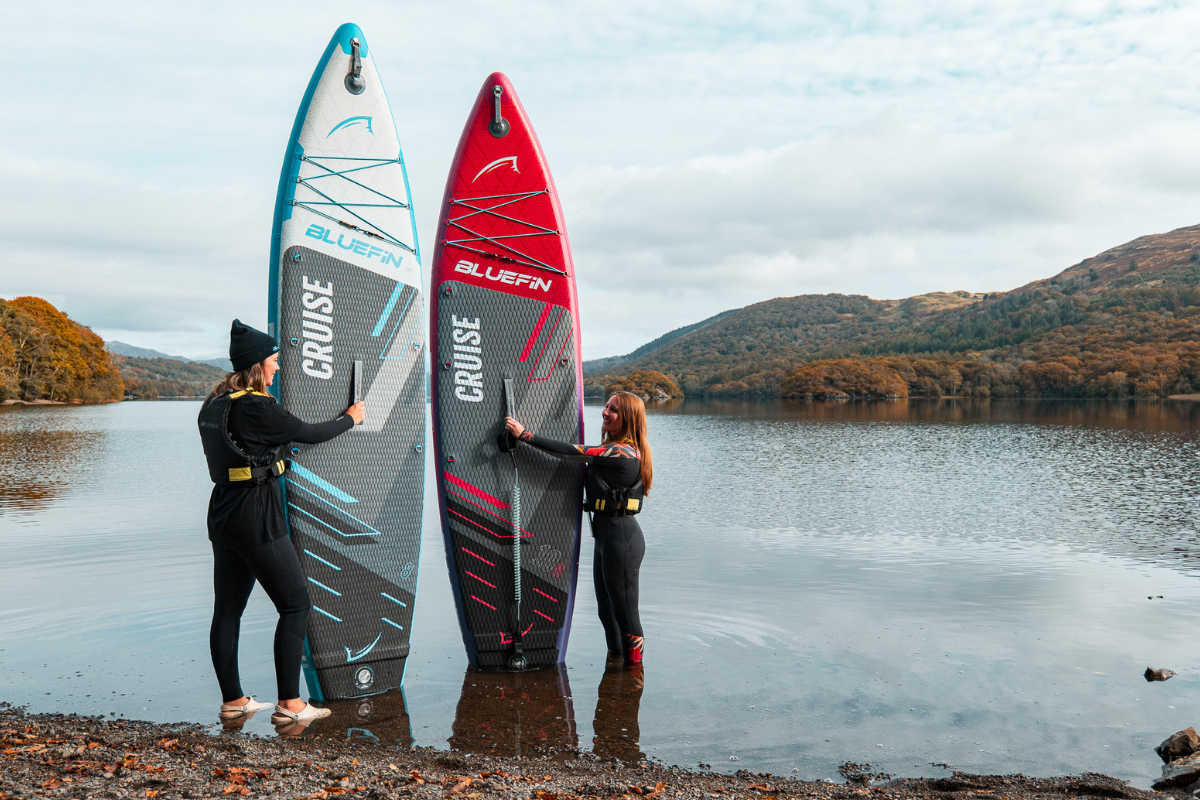

For many people, paddleboarding is associated with blue skies, warm weekends and long summer evenings. August ends, the board is dried, packed into its bag and left there until the following spring. But paddleboarding after summer in the UK can offer some of the most enjoyable sessions of the entire year.
September and October bring quieter beaches, calmer-looking launch areas and landscapes that change every week. Familiar rivers, lakes and canals take on autumn colours, while popular summer destinations can feel completely different once the holiday crowds disappear. There are extra considerations. UK water can be cold even when the air feels relatively mild, daylight becomes limited and weather conditions can change quickly. Autumn SUP requires better preparation, not necessarily an end to paddling.
Here are five reasons to keep your board ready.
1. Quieter Water Can Make Paddleboarding More Enjoyable
One of the biggest benefits of autumn paddleboarding is simply having more room. A lake, canal or coastal launch that felt hectic during a sunny August weekend can become considerably quieter once schools return and the peak holiday season ends. That creates a different atmosphere.
Instead of navigating around large numbers of swimmers, boats and other paddleboarders, you can concentrate on your own paddling, the landscape and the route ahead. Quieter conditions can be particularly helpful for less experienced paddlers who want to practise without feeling watched or rushed.
You might use the extra space to:
Improve your forward stroke
Practise sweep turns
Work on paddling in a straighter line
Improve your launching and landing technique
Become more confident moving around the board
Try a familiar route at a slower pace
There is an important distinction, though: quieter does not automatically mean safer. With fewer people around, there may also be fewer people nearby if something goes wrong. Some seasonal facilities and lifeguard services may no longer operate as they did during peak summer. That makes carrying suitable safety equipment and telling someone your route even more important.
2. Autumn Transforms Familiar UK Paddleboarding Spots
You do not always need a new destination to find a new adventure. Return to somewhere you paddled in July a couple of months later and the experience can be surprisingly different. Trees lining canals, rivers and reservoirs begin changing colour. Early mornings can bring mist across sheltered water. Lower autumn sunlight creates different views and reflections, while quieter surroundings make it easier to notice wildlife along the bank.
Autumn effectively gives your favourite summer paddling locations a second season. Instead of constantly chasing new places, revisit somewhere you already know well. That familiarity can actually be useful as conditions become more variable. Knowing the launch point, exit options and basic geography of the route removes some uncertainty.
Look for a Different Kind of SUP Adventure
Your autumn paddle does not need to be long. Try organising sessions around a particular experience:
A short sunrise paddle on sheltered water
An autumn photography session
A familiar canal route with a friend
A wildlife-focused paddle
A relaxed morning session followed by somewhere warm for lunch
Short, memorable paddles often make more sense than ambitious mileage when daylight and weather windows become limited.
Do Not Let Autumn Sunshine Fool You
A bright October afternoon can look remarkably inviting from the shore. The air temperature, however, is only one part of the decision. Before launching, check wind strength, gusts, wind direction, visibility, local conditions and, where relevant, tides.
This matters especially around the coast. Offshore winds can quickly carry a paddleboard away from land, and the RNLI continues to advise SUP users to avoid them, wear a buoyancy aid, use an appropriate leash and carrying a waterproof case for your phone means you are able to call for help.
3. Continuing Through Autumn Helps You Become a Better Paddler
Think about how most people learn to paddleboard. They might have a few sessions during one summer, gradually become more stable and finally start feeling confident. Then winter arrives.
Eight months later, they step back onto the board and spend the beginning of the next summer rediscovering those same skills. Continuing to paddle through September and October helps maintain your technique and confidence. Consistency gives movements time to become familiar.
You stop thinking as much about where to put your feet or how to hold the paddle and can spend more attention on efficiency, route choice and what is happening around you.
Autumn Skills Worth Practising
Quieter sessions are ideal for deliberate practice. Choose one skill for each outing:
Efficient forward strokes
Paddling straight for longer before changing sides
Sweep turns
Reverse strokes
Controlled stopping
Moving from standing to kneeling smoothly
Moving your feet around the board
Step-back turns when your experience and conditions make them appropriate
You do not need to turn the entire session into training. Spend ten minutes practising, then continue your normal paddle. Small improvements repeated regularly can make a noticeable difference by next summer.
Better Paddlers Make Better Decisions Too
Improvement is not only about balance and paddle technique. It is also about judgement. An experienced paddler should become increasingly comfortable saying, “Not today.”
Maybe the wind is stronger than forecast. Perhaps visibility is deteriorating. Maybe you have arrived later than planned and there is not enough daylight for the route. Changing your plans is not a failed paddle. Knowing when conditions do not suit your ability is part of becoming a better paddler.
4. Paddleboarding Keeps You Active as the Seasons Change
It becomes very easy to spend less time outdoors once the summer ends. Evenings become shorter, temperatures fall and familiar summer routines disappear. Keeping paddleboarding in your calendar gives you a reason to continue spending time outside.
SUP also involves more of the body than it may appear from shore. Your legs make continuous balance adjustments, your core stabilises your position and your upper body drives the paddle. A relaxed session can therefore provide an enjoyable form of outdoor movement without needing to turn every trip into an intense workout. There is another benefit: having a destination makes getting outside easier.
Instead of waiting months for another hot day, you begin looking at weather differently.
You ask:
Where is sheltered from today's wind?
Is there a good weather window on Sunday morning?
Would a canal be better than the coast this weekend?
Is there enough daylight for a short paddle?
Which familiar route would work in these conditions?
That shift can turn SUP from a summer activity into a much broader outdoor hobby.
Keep Autumn Paddling Easy to Repeat
Do not create unnecessary barriers. A three-hour drive for a major expedition might sound exciting, but it is unlikely to happen every weekend. A local 45-minute paddle is easier.
Consistency usually beats ambition when you are extending your season. Keep your equipment organised, identify several local paddling options and become comfortable choosing shorter sessions.
5. You Get More From the Paddleboard You Already Own
If you have invested in a paddleboard, why restrict it to a handful of warm weekends. Extending your season means getting more use, more skills and more experiences from equipment you already own. It also encourages a better approach to outdoor gear: buy carefully, maintain what you own and use it for longer.
That thinking sits naturally alongside Bluefin's emphasis on durable SUP construction. You can explore the approach behind the boards on our Built to Last page. Our current range is designed around durability and long-term use rather than treating inflatable SUPs as disposable seasonal equipment.
Take Care of Your Board During Autumn
More frequent use only makes sense if you also maintain your equipment.
After a muddy river launch or coastal paddle:
Rinse away salt, sand or dirt when required.
Check the fin and fin box for debris.
Allow wet equipment to dry properly.
Inspect the board, paddle and safety equipment for damage.
Make sure everything is ready before storing it.
A few minutes of maintenance can make the next spontaneous paddle considerably easier.
Paddleboarding After Summer in the UK: What Changes?
The main mistake to avoid is treating an October paddle exactly like one in July. The board might be the same. The environment is not.
Water Temperature Matters More Than Air Temperature
This is one of the most important principles of autumn SUP. The RNLI defines water of 15°C or below as cold water and notes that average UK and Irish sea temperatures are around 12°C. Sudden immersion in cold water can seriously affect breathing and movement.
That matters because paddleboarders often plan on staying dry. You may not intend to enter the water, but you should still prepare for the possibility that you will. Dress with immersion in mind, not simply how warm you feel while standing beside the car.
Daylight Shrinks Quickly
Long summer evenings can create a false sense of how much time you have. By autumn, sunset arrives much earlier. Give yourself a generous buffer rather than planning to finish precisely at sunset. Inflating the board, changing clothes, dealing with equipment or an unexpected headwind can all add time.
Weather Windows Become More Important
A good autumn paddle may depend on taking advantage of a smaller weather window. Rather than deciding that Saturday is “paddleboarding day” regardless of the forecast, look at the entire weekend. Flexibility is one of the most useful pieces of autumn SUP equipment you can have.
What to Wear Paddleboarding in Autumn in the UK
There is no single correct autumn outfit. Conditions in Cornwall in early September can be very different from Scotland in late October.
Choose clothing according to:
Water temperature
Air temperature
Wind
Exposure
Length of session
Your experience
Depending on conditions, paddlers may consider an appropriate wetsuit or drysuit, suitable insulation, neoprene footwear and warm clothing for immediately after the session.
A buoyancy aid should also form part of your safety setup. Avoid choosing clothing purely because it feels comfortable while you are dry. Think about what happens if you fall in.

UK SUP Safety and Access After Summer
Check Your Leash Setup
Not every leash is suitable for every paddling environment. Paddle UK's current guidance says ankle and calf leashes are suitable for environments such as lakes, canals, sea and coastal bays where there is no meaningful snag or entrapment risk. Different guidance applies to moving water, where an appropriate quick-release system may be required. The right leash depends on the water you are paddling. Do not assume the same setup works everywhere.
Check Whether You Need a Waterways Licence
For many managed rivers and canals in England and Wales, paddleboards require a waterways licence. Paddle UK confirms that paddleboards are treated as boats for this purpose and that requirements depend on the waterway being used.
Before trying somewhere new:
Check who manages the water
Confirm whether SUP is permitted
Check licence or permit requirements
Look for local restrictions
Identify legitimate launch and exit points
Respect protected wildlife areas
Access arrangements differ around the UK, so check the specific location rather than assuming one rule applies everywhere.
Which Bluefin SUP Suits a Longer UK Paddling Season?
There is no special autumn paddleboard. The right choice depends on your paddling style, experience and where you intend to go.
Bluefin Cruise: The Versatile All-Rounder
The Bluefin Cruise is designed as a stable yet responsive all-round SUP, making it a natural fit for paddlers who want one board for a mixture of recreational sessions and progression. That versatility is useful if your autumn paddling might include sheltered lakes one weekend and a familiar calm coastal location another.
Bluefin Carbon: For Paddlers Looking to Progress
The Bluefin Carbon is positioned towards paddlers looking for greater stiffness, performance and control. It can make sense for those whose paddling ambitions are moving towards longer sessions and more deliberate progression. A more performance-focused board does not make unsuitable weather safe, however. Equipment complements good judgement; it never replaces it.
Bluefin Lite: For Simple, Spontaneous Sessions
If portability is what gets you onto the water more often, consider the Bluefin Lite. Its compact, lightweight design is aimed particularly at beginners and casual paddlers. That can be useful for shorter autumn sessions when you want the process of getting from home to water to remain straightforward.
UK Autumn Paddleboarding Checklist
Conditions
Wind speed and gusts
Wind direction
Water temperature
Air temperature
Rain and visibility
Tide times when relevant
Sunset time
Forecast changes during your planned session
Equipment
Suitable buoyancy aid
Correct leash for the environment
Waterproof case for phone
Clothing appropriate for possible immersion
Warm, dry clothes for afterwards
Paddle, fin and board checked
Planning
Confirm the route suits your ability
Check access or licensing requirements
Tell someone where you are going
Identify launch and exit points
Allow plenty of daylight
Paddle with others where appropriate
Finally, look at the water when you arrive. If reality does not match the forecast, reconsider. Driving all the way to the launch point does not create an obligation to paddle.
Summary: Why Keep Paddleboarding After Summer in the UK?
There are plenty of reasons to keep your SUP season going.
Quieter waterways can make familiar locations more peaceful.
Autumn scenery transforms routes you thought you already knew.
Regular practice helps preserve and improve your paddling skills.
SUP keeps you active outdoors as other summer routines disappear.
You get more use from equipment you already own.
The biggest difference is preparation. Paddleboarding after summer in the UK requires more attention to cold water, wind, daylight, local access and the equipment you carry. Get those decisions right and September and October do not have to feel like the end of the SUP season. They can become some of the months you look forward to most.
Do Not Pack Your SUP Away Yet
Autumn brings colder water and shorter days, but it also brings quieter launch points, changing landscapes and another opportunity to become a more confident paddler.
Choose your conditions carefully, prepare properly and keep exploring beyond summer.
Share:
Why September Is the Best Month for Paddleboarding
When to Upgrade Your Paddle Board: 7 Signs It’s Time